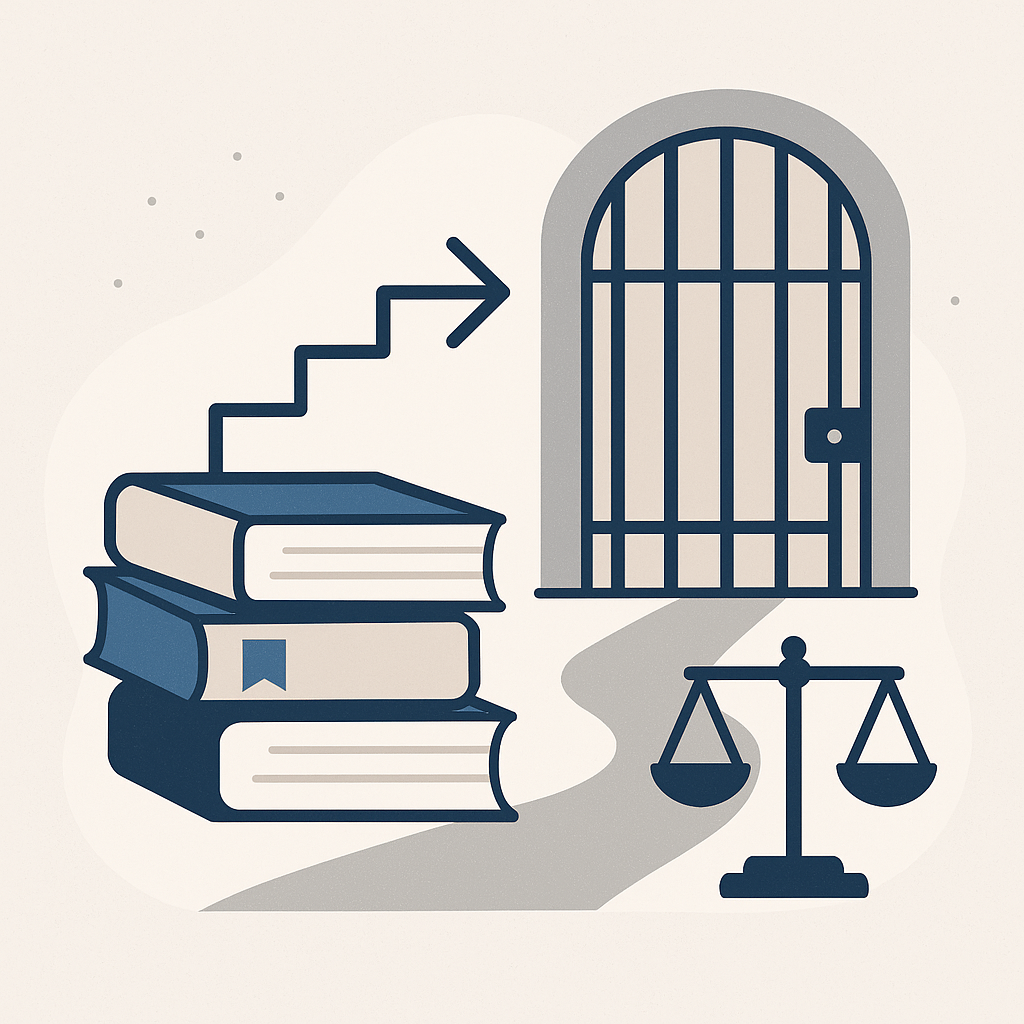
The role of a penitentiary system should not be limited to punishment. The law recognizes that a custodial sentence also has an essential purpose: social reintegration.
But… does it really work that way in practice?
In one of our latest TikTok videos, Ignacio Estradé explains what the process is like after completing a sentence and what a person encounters when they walk out the exit door of a penitentiary center.
The Moment of Freedom: Between Euphoria and a Harsh Reality
Being released after serving a sentence is often experienced as a mix of intense joy and absolute vertigo.
However, after that initial moment, an inevitable emotional shock follows:
- Is the person truly prepared to return to life in society?
- How will they face work, family, a partner, or their studies?
- What happens when they must resume routines they haven’t experienced for months or even years?
Freedom is not an end. It is the beginning of a complex period, full of uncertainties, fears, and doubts.
An emotionally vulnerable stage
Ignacio Estradé sums it up clearly:
“An inmate, upon release, finds themselves in a moment of emotional weakness.”
And returning to society means facing:
- The pressure of becoming autonomous again.
- Social or family judgment.
- Work-related demands.
- The need to rebuild emotional bonds.
Many inmates are released with limited emotional or practical tools to manage this new situation.
Are there real resources available for reintegration?
Public administrations have limited resources, but there are options that can make a real difference:
✔ Training and education
Programs to acquire professional skills or continue studies.
✔ Financial benefits
Like the Minimum Vital Income or accumulated unemployment benefits, which provide initial support to prevent falling into extreme situations.
✔ NGOs and specialized associations
Muchas entidades trabajan específicamente en la social reintegrationaccompanying people who are released from prison during their first months outside the facility.
These organizations are often a fundamental bridge between the inmate and society, helping with administrative procedures, housing, job placement, and emotional support.
Real reintegration or theoretical ideal?
The final question remains open: Do prisons truly rehabilitate?
The answer depends on multiple factors:
- The tools provided by the penitentiary system.
- The external support available upon regaining freedom.
- The inmate’s social and family environment.
- Access to education, employment, and emotional stability.
What is clear is that reintegration does not happen automatically upon walking out the door: it requires guidance, opportunities, and a solid support network.
A second chance is indeed possible
At Estradé Law Firm, we believe that society must offer real second chances, not just theoretical ones.
Reintegration is possible, but it requires:
- A more prepared system.
- More resources.
- And above all, more humanity.
Because starting over should not be a leap into the void.